
Social Licence
Learn from leading experts and connect with other professionals who centre humans in the energy transition.
Our Social Licence Community of Practice brings together people with boots on the ground in the energy transition to explore the challenges and opportunities to build and prioritise trust with landholders, communities, Traditional Custodians, local governments and other stakeholders.
With topical presentations and discussions exploring the themes of engaging meaningfully, managing impacts, realising benefits and being accountable, this Community of Practice forms an essential part of your engagement toolkit.
Join the Social Licence Community of Practice
These sessions are open to anyone who would like to come along and learn. Join our Community of Practice and receive notification of upcoming sessions and the opportunity to tell us what you’d like to learn in future sessions.

Register now: Tracking the Shift + Attitudes to Australia’s Energy Transition
In this upcoming Social Licence Community of Practice on Thursday, 22 October at 12pm AEDT, Dr Rebecca Huntley, Director, Data, Research & Insights at 89 Degrees East will share the Clean Energy Solutions Index (CESI), Australia’s annual research programme designed to measure deep support for the energy transition and to unpack the attitudes that underpin that support.
This session will unpack the latest findings, how things have shifted and what these findings mean for the sector over the next 12 months.
“I don’t want this brilliant conversation to end – it’s such a wicked and wonderful challenge and the way we honour humanity matters so much.”
Participant, Social Licence Community of Practice
Meet the hosts

Melissa Pisani
Head of Public Affairs and Stakeholder Relations, Ark Energy
Melissa has more than 20 years’ experience working in communications and stakeholder relations. As Head of Communications & Stakeholder Engagement for Ark Energy, Melissa guides and develops the company’s community engagement practice for a growing portfolio of renewable energy (wind, solar, battery energy storage, hydrogen) projects across New South Wales, Queensland and Tasmania.
Melissa is passionate about the clean energy transition and facilitating it through inclusive and genuine collaboration with local stakeholders, to deliver meaningful, legacy outcomes for regional communities.
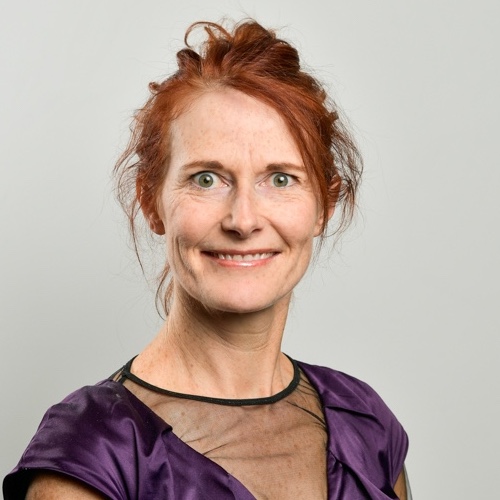
Rosie King
Director of Partnerships and Engagement, Energy Estate
Rosie is a passionate advocate for inclusive, community-led renewable energy development, currently working with Energy Estate on transformative projects across Australia, Aotearoa New Zealand and the US. With a strong focus on First Nations engagement, Rosie brings a deep commitment to building respectful, enduring partnerships with them and their communities.
Rosie’s approach is grounded in listening, learning and co-design, ensuring that Indigenous voices and are not only heard, but shape the direction and outcomes of clean energy initiatives.
In this fascinating Community of Practice, we were joined by Dr John Pickering, Chief Behavioural Scientist at Evidn, who shared key insights from Evidn’s behavioural research into the psychological, social and contextual factors influencing landholder and community readiness to engage with renewable energy developers.
John walked us through the ‘psychology of resistance’ and some of the ideas and strategies we can use to help overcome resistance and foster trust, autonomy and agency in regional communities as we navigate the energy transition together.
At our first Social Licence Community of Practice for 2026, Sarah Downie, CEO of the Shared Value Project, explored how shared value thinking can strengthen social licence by making community engagement more intentional, more measurable and more sustainable. We’ll look at practical examples and discuss what this means whether you’re in a community for the long haul or planning to sell.
Learning outcomes:
- Shared value strengthens social licence by creating genuine mutual benefit, not just acceptance, but authentic community partnership
- Strong community relationships are a business asset whether you’re operating long-term or looking to sell. No one wants to buy a project where community relationships are stressed
- Existing community engagement may already be creating business value. The opportunity is often in being more intentional about measuring and communicating it
- Reframing community investment from cost to business case unlocks greater resources, which means communities win more too.
At our final Social Licence Community of Practice for 2025, Kirsty O’Connell, co-founder of The Australian National University’s Next Generation Engagement Program, shared research and practical strategies for improving trust, project acceptance, and addressing misinformation in the energy sector.
Key takeaways:
- Key drivers of project acceptance: Social value, cumulative impacts and perceived risks, and—most importantly—the quality of engagement.
- Managing social risks: Transparent communication and responsive engagement are critical to mitigating risks such as land acquisition concerns, cumulative effects, and political influence.
- Social due diligence: Using publicly available data and engagement insights to build community profiles and support respectful, evidence-based decision-making.
- Building trust: Maintaining public commitment registers and written, trackable promises to communities.
- Combating misinformation: A three-phase framework—pre-emption, pre-bunking, and debunking—supported by trusted local voices and accurate information.
- Community energy literacy: Assessing knowledge levels and creating tailored educational resources through collaboration with schools and industry partners.
- Government perceptions: Communities often see “government” as a single entity, contributing to confusion and low trust.
ANU Professor Dr Sara Bice, Co-Founder and Director of ANU spin-off, Next Generation Engagement, helped us explore how unconscious bias shows up in our engagement practices and what we can do to address it. We also touched on how many communities are feeling like a lot is happening TO them rather than WITH them.
Key takeaways:
- Acknowledge and address presumed benevolence – the unconscious assumption that “good for all” projects (like renewables) will be automatically accepted. Without care, this bias can fuel community resistance.
- Build collective efficacy – strengthening people’s belief that, together, their communities can shape outcomes, despite challenges. This sense of shared agency is vital for trust and momentum.
- Use the compression effect – recognising that social licence isn’t static. It flows across project, community, and industry levels – meaning local failures can ripple outward, compressing trust across the sector.
The Energy Charter’s third Social Licence Community of Practice brought together professionals from across the energy sector to explore groundbreaking research from Dr Scott Condie and Dr Justine Lacey of the CSIRO on measuring and modeling social licence in renewable energy projects.
Key research insights:
- Social licence can be measured scientifically using comprehensive community surveys and advanced modeling techniques
- The Social Licence Graph – a new visualisation tool that maps community sentiment from “social obligation” (strong opposition) through “contested” to “social licence” (strong support)
- Trust sits at the center of all social licence models and is the critical mediating factor
- Offshore wind generally has better community support than onshore wind across international studies
- Australia sits in the “contested” middle ground for renewable energy acceptance – not strongly opposed but not yet achieving social licence
Strategic learnings:
- Independent, unbiased surveys reveal large uncertain populations, while media focuses on extremes
- Social media is persuasive but untrusted by communities
- Collaborative learning and science literacy reduce conflict more effectively than advertising
- Local attitudes often depend on how communities self-identify (e.g., industrial heritage areas may be more supportive)
- Support typically increases through the development cycle from planning to operation
- Practical Applications: The research provides tools for developers and policymakers to understand community sentiment, identify risks early, and develop targeted engagement strategies that build genuine trust rather than simply managing opposition.
In this Community of Practice, we heard from Louise Pogmore and Hannah Lock from KPMG Australia, and Dr Kimberley Crofts, who delivered insightful presentations on their deep work unpacking the challenges facing the human side of this transformative era.
Takeaways from the session:
- The awareness-support gap: While awareness of energy transition is growing (34%), support isn’t keeping pace (66%). This highlights a critical challenge for our sector.
- We’re facing a transformation, not just a transition – especially in regional communities where we need to create genuine shared value.
Trust requires three elements: ABILITY (demonstrating capability), HUMANITY (prioritising people), and INTEGRITY (ethical leadership). - As Louise Pogmore noted, how we work with “humanity” may be our weakest link right now.
- Communities need more than consultation – they need voice, respect, and influence in shaping their futures.
- We need to expand our definition of “community” beyond directly impacted areas to engage with broader regional and public concerns.
In this session, we heard from experts and boots on the ground to better understand biosecurity management in today’s high-risk environment. With threats like bird flu, foot-and-mouth disease and other emerging biosecurity risks, it’s more important than ever to elevate how we protect farms and projects throughout the energy transition.
Hear from four speakers across agriculture, renewable energy and transmission operations who will share case studies and better practice solutions.
Queensland Farmers’ Federation – The farmer perspective
Dr Laurie Dowling, Agriculture and Biosecurity Coordination Officer, Queensland Farmers’ Federation shared on:
- Why biosecurity is critical for famers
- Why there are increasing concerns (changes over the last 30 years)
- Pathways for entry (kinds of risks)
- Biosecurity responsibilities
AusNet Services – Biosecurity management in the transmission sector
Taree Lamplugh, Engagement Lead, AusNet Services who shared on:
- AusNet’s approach to biosecurity management
- Recent project experience
Tilt Renewables – Biosecurity management in the renewables sector
Daved Owen, Environmental Compliance Manager, Tilt Renewables who shared on:
- Tilt Renewables’ operating context
- Overview of biosecurity management and measures during project development and construction
- Biosecurity management during operations including compliance, O&M contractors, inductions
ExoFlare – Biosecurity management software solution
Andrea Koch and Chris Aitken, Exoflare who shared on:
- Jurisdictional responsibility around Emergency Animal Diseases (EAD)
- Record keeping and good practice between entities – farmers and businesses
- Compliance with place-based biosecurity management plans + movement permits
- ExoFlare solution and how it looks in practice
- Data sharing + understanding the network and benefits

Learn more
Speak to Roger Marshall, Director, Energy Transition, to learn more about the Social Licence Community of Practice.